Introduction
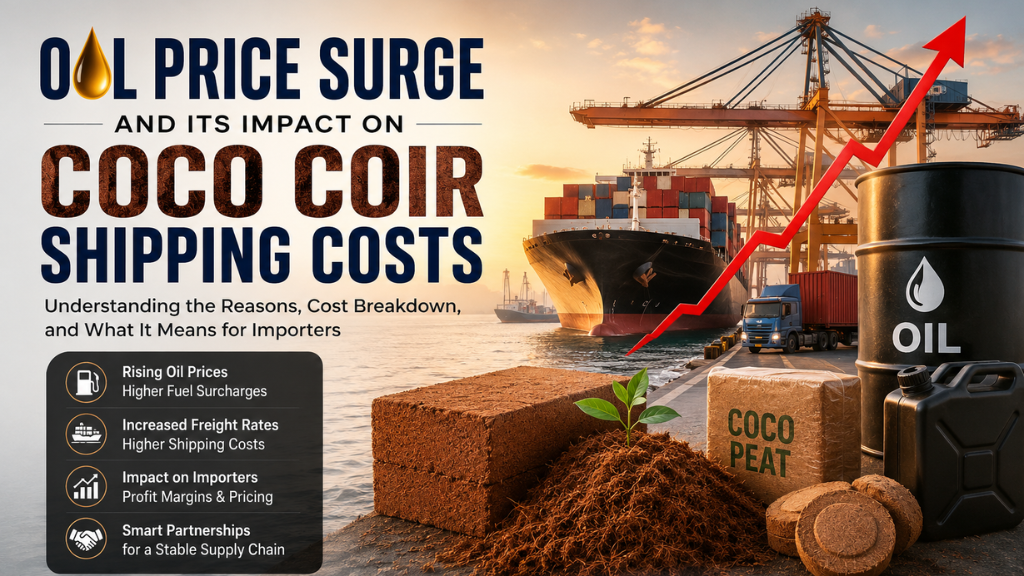
Rising global oil prices are reshaping international trade, and the impact is clearly visible in the coco coir shipping cost. Importers and bulk buyers are increasingly facing fluctuating freight charges, making it difficult to plan budgets and maintain consistent pricing. What seems like sudden price changes is actually driven by fuel-related logistics costs. In this blog, we break down the real reasons behind the cocopeat shipping cost increase and help you understand how it affects your sourcing decisions.
Why Coco Coir Shipping Costs Are Increasing Globally
Over the past few years, global buyers have noticed a steady rise, and frequent fluctuation in coco coir shipping cost. For businesses relying on cocopeat for horticulture, hydroponics, and agriculture, this uncertainty directly impacts profitability and supply chain stability.
How Price Fluctuations Affect Importers and Distributors
Frequent changes in freight rates create confusion and risk. These fluctuations are not random, they are closely tied to global economic factors, especially fuel prices. As a result, the cocopeat shipping cost increase has become a key concern for bulk buyers across the USA, Europe, and the Middle East.
Understanding the Global Oil Price Surge
Key Factors Driving Oil Price Increases
Global oil prices have surged due to a combination of geopolitical tensions, supply constraints, and production control measures by major oil-producing nations. Disruptions in supply chains and rising demand post-pandemic have further intensified the situation, pushing fuel costs upward.
The Role of Fuel in Global Freight and Logistics
Fuel is the backbone of global shipping. Ocean freight relies heavily on bunker fuel, while inland logistics depend on diesel. When oil prices rise, transportation costs increase at every stage, from factory to port, and from port to destination. This directly contributes to the oil price impact on freight, making exports more expensive across industries, including coco coir.
Shipping Cost Breakdown for Coco Coir Exports
i) Ocean Freight Charges and Container Rates
Ocean freight is the largest component of international shipping cost cocopeat. It includes the cost of transporting containers across shipping routes. Freight rates vary based on demand, route congestion, and fuel prices.
ii) Fuel Surcharges (BAF) and Their Impact
The Bunker Adjustment Factor (BAF) is a fuel surcharge applied by shipping lines. As oil prices rise, BAF charges increase significantly, often contributing to 15–40% of the total freight cost. This is a major driver behind rising cocopeat logistics cost.
iii) Inland Transportation and Port Handling Costs
Transportation from manufacturing units to ports involves trucking, which is fuel-dependent. Port handling charges, loading, and unloading costs also increase when fuel and operational expenses rise.
iv) Documentation, Duties, and Miscellaneous Charges
Additional costs include export documentation, customs clearance, and handling fees. While smaller compared to freight, these charges collectively add to the overall coco coir export cost.
Before vs After Oil Price Surge – A Cost Comparison
Shipping Scenario Before Oil Price Increase
Before the oil price surge, freight rates were relatively stable. Fuel surcharges were manageable, and buyers could rely on consistent shipping quotes. Budgeting and long-term planning were easier for importers.
Shipping Scenario After Oil Price Increase
Post-surge, the situation has changed dramatically. Freight rates have become volatile, with frequent revisions. Fuel surcharges have increased significantly, and container availability has tightened in certain regions.
Percentage Increase in Freight Charges (Estimated Trends)
In many cases, shipping costs have increased by 20% to 50% depending on routes and market conditions. This sharp rise has directly contributed to the ongoing cocopeat shipping cost increase, impacting both suppliers and buyers.
Direct Impact on Coco Coir Shipping Costs
Increase in Cost Per Container and Bulk Orders
The rise in fuel prices has increased the cost per container, making bulk shipments more expensive. Importers now pay significantly higher freight charges compared to previous years.
Rising Cost Per Unit (Bricks, Blocks, Grow Bags)
As shipping costs increase, the per-unit cost of cocopeat products—such as bricks, blocks, and grow bags, also rises. This affects pricing strategies for distributors and retailers.
Impact on Profit Margins for Importers
Higher freight charges cocopeat export reduce profit margins unless buyers pass on the cost to end customers. This creates competitive pressure in price-sensitive markets.
Regional Impact on Cocopeat Importers
Shipping Cost Impact in the USA Market
The USA market faces higher shipping costs due to longer transit distances. Increased fuel consumption on these routes amplifies the international shipping cost cocopeat, making imports more expensive.
European Market Challenges and Cost Pressures
Europe has experienced additional challenges, including port congestion and energy-related cost increases. These factors further elevate cocopeat logistics cost for importers.
Middle East Market – Trends and Observations
The Middle East, being geographically closer to major cocopeat exporting countries, experiences relatively moderate increases. However, fluctuations in oil prices still affect freight rates and overall costs.
Hidden Costs in Cocopeat Logistics Buyers Often Miss
i) Currency Fluctuations and Exchange Rate Impact
Exchange rate volatility can increase the landed cost of imports, especially when payments are made in foreign currencies.
ii) Port Delays, Demurrage, and Storage Charges
Delays at ports can result in demurrage and storage fees, adding unexpected expenses to shipments.
iii) Seasonal Demand and Freight Volatility
Peak seasons often lead to higher freight rates due to increased demand for containers, further impacting coco coir shipping cost.
Why Choosing the Right Coco Coir Exporter Matters
Consistent Pricing and Reliable Logistics
At Chithu Group, we understand how fluctuating the coco coir shipping cost can be due to global fuel fluctuations. That’s why we focus on maintaining consistent pricing through efficient planning, strong logistics coordination, and timely delivery commitments. Our integrated operations, from sourcing to export, which help us minimize disruptions and provide stability for our global buyers.
Strong Global Distribution Network
With exports reaching over 50+ countries, we have built a reliable international distribution network that ensures smooth and efficient movement of goods. Our end-to-end supply chain, from coconut harvesting to finished coco peat blocks, allows us to control quality and optimize international shipping cost cocopeat, delivering value across regions.
Ability to Handle Freight Fluctuations
Backed by decades of experience in the coconut and coir industry, we are equipped to manage the cocopeat logistics cost even during market volatility. Our in-house sourcing, large-scale production capacity, and established export systems enable us to absorb and strategically manage the oil price impact on freight, helping our customers reduce risk and maintain competitive pricing.
Future Outlook: Will Coco Coir Shipping Costs Stabilize?
Short-Term Volatility in Oil and Freight Markets
In the short term, oil prices and freight rates are expected to remain volatile due to ongoing global uncertainties.
Long-Term Trends in Global Shipping Costs
Over time, improvements in logistics efficiency and alternative energy adoption may help stabilize costs. However, buyers should be prepared for periodic fluctuations.
Conclusion: Making Smarter Buying Decisions in a Volatile Market
The rise in oil prices has had a clear and measurable impact on coco coir shipping cost, affecting every stage of the supply chain. From fuel surcharges to freight rates, the oil price impact on freight has made pricing more dynamic and, at times, unpredictable. For global buyers, understanding these cost drivers is essential to making informed purchasing decisions.
Rather than viewing price fluctuations as arbitrary, importers should recognize them as part of a larger global economic cycle. By focusing on efficient logistics, bulk planning, and strategic partnerships, businesses can navigate these challenges effectively.
Reduce your coco coir shipping cost, partner with Chithu Group for transparent pricing and reliable global cocopeat supply today.
FAQs
1. Why is coco coir shipping cost increasing?
The coco coir shipping cost is rising mainly due to higher fuel prices, increased freight charges, and global logistics disruptions.
2. How does oil price impact on freight affect cocopeat exports?
The oil price impact on freight increases fuel surcharges, directly raising overall coco coir export cost for international shipments.
3. What factors influence international shipping cost cocopeat?
The international shipping cost cocopeat depends on container rates, fuel surcharges, port charges, and inland transportation expenses.
4. Why are freight charges cocopeat export fluctuating frequently?
Freight charges cocopeat export fluctuate due to oil price changes, seasonal demand, and container availability in global shipping markets.
5. How can buyers reduce cocopeat shipping cost?
Buyers can reduce cocopeat shipping cost by ordering in bulk, optimizing container loads, and partnering with reliable exporters