Introduction
The global demand for sustainable growing media has increased rapidly over the last decade, making cocopeat one of the most preferred solutions in modern agriculture and horticulture. Whether it is greenhouse farming in the USA, hydroponic cultivation in the UAE, or commercial nurseries in Europe, businesses are actively searching for a trusted Cocopeat Manufacturer that can deliver consistent quality and international export standards.
India has emerged as a leading hub for cocopeat production due to its abundant coconut resources and strong export infrastructure. However, choosing the right coco peat exporter or cocopeat supplier from India is critical for ensuring product quality, timely delivery, and long-term business success.
This guide explains the essential factors importers, distributors, and industrial buyers should consider before selecting a reliable cocopeat manufacturer & exporter.
Understanding Cocopeat and Its Global Demand
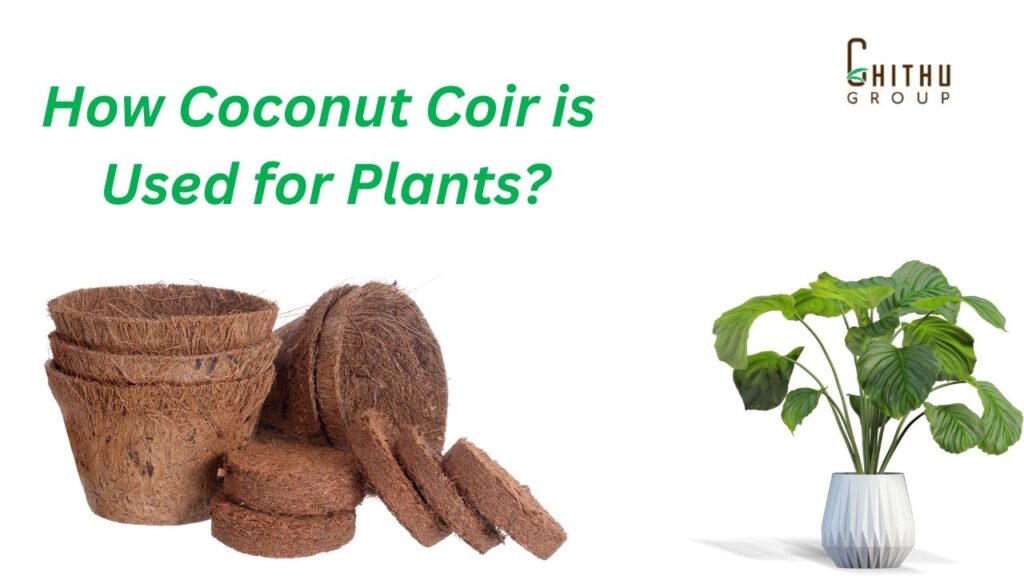
Cocopeat, also known as coir pith, is a natural byproduct extracted from coconut husks. It is widely used in:
- Hydroponic Farming
- Greenhouse Cultivation
- Seed Germination
- Soil Conditioning
- Landscaping Projects
- Commercial Horticulture
The rising preference for eco-friendly and water-retaining growing mediums has significantly increased demand for cocopeat products worldwide.
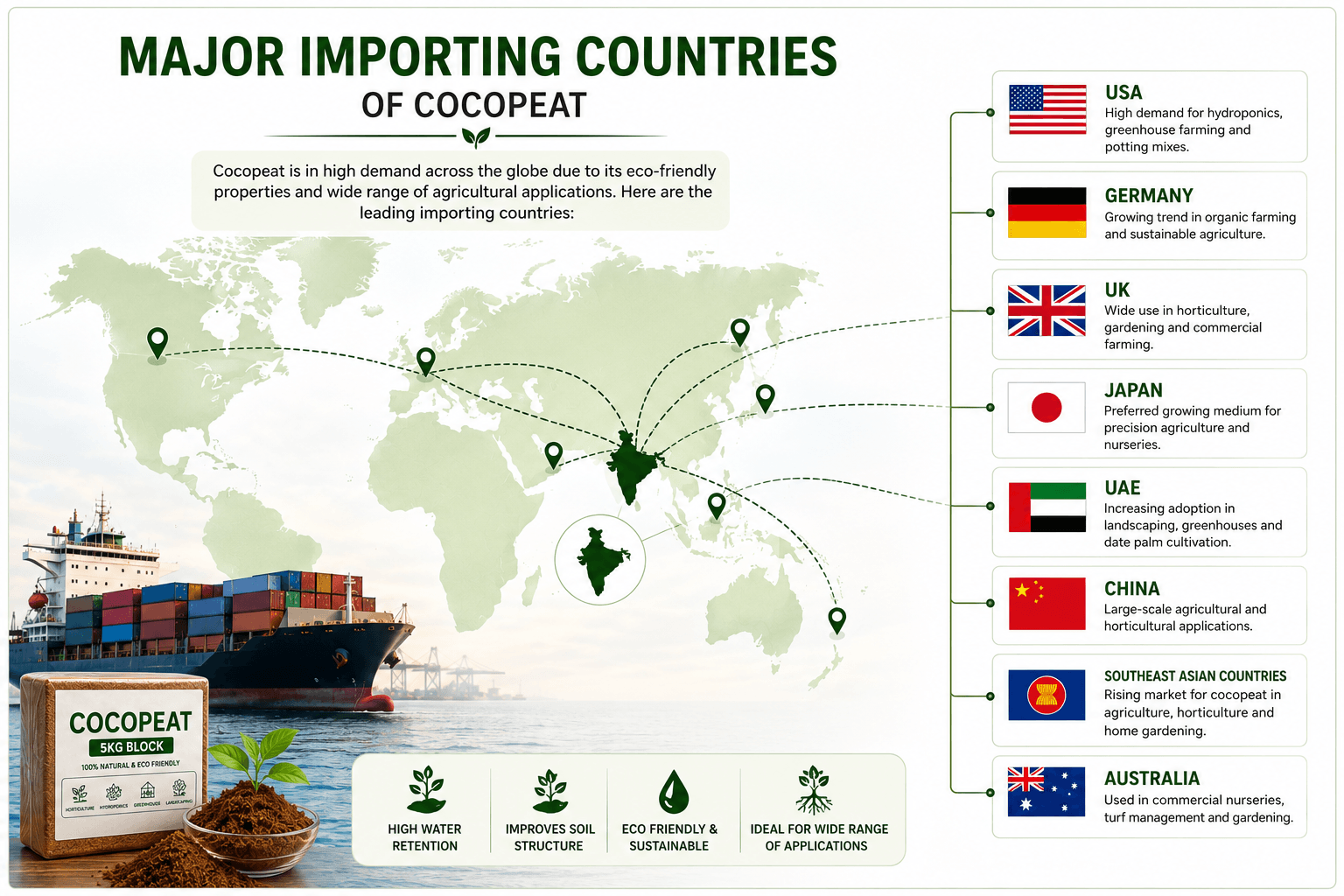
Major importing countries include:
- USA
- Germany
- UK
- Japan
- UAE
- China
- South Korea
- Australia
- Southeast Asian Countries
India and Sri Lanka remain among the largest exporting countries due to their large-scale coconut processing industries.
Why India Is a Leading Cocopeat Export Hub
India has become a preferred destination for global buyers looking for a reliable cocopeat supplier from India. Several factors contribute to this dominance:
Abundant Raw Material Availability
India produces millions of coconuts annually, ensuring uninterrupted raw material supply for cocopeat production.
Advanced Manufacturing Facilities
Modern manufacturing plants use automated drying, sieving, buffering, and compression systems to maintain consistent product quality.
Strong Export Infrastructure
Indian ports such as Chennai, Tuticorin, and Cochin enable faster international shipping to global markets.
Competitive Pricing
Indian exporters provide cost-effective solutions without compromising quality standards.
As a result, many importers prefer working with a cocopeat exporter from India for bulk agricultural and horticultural requirements.
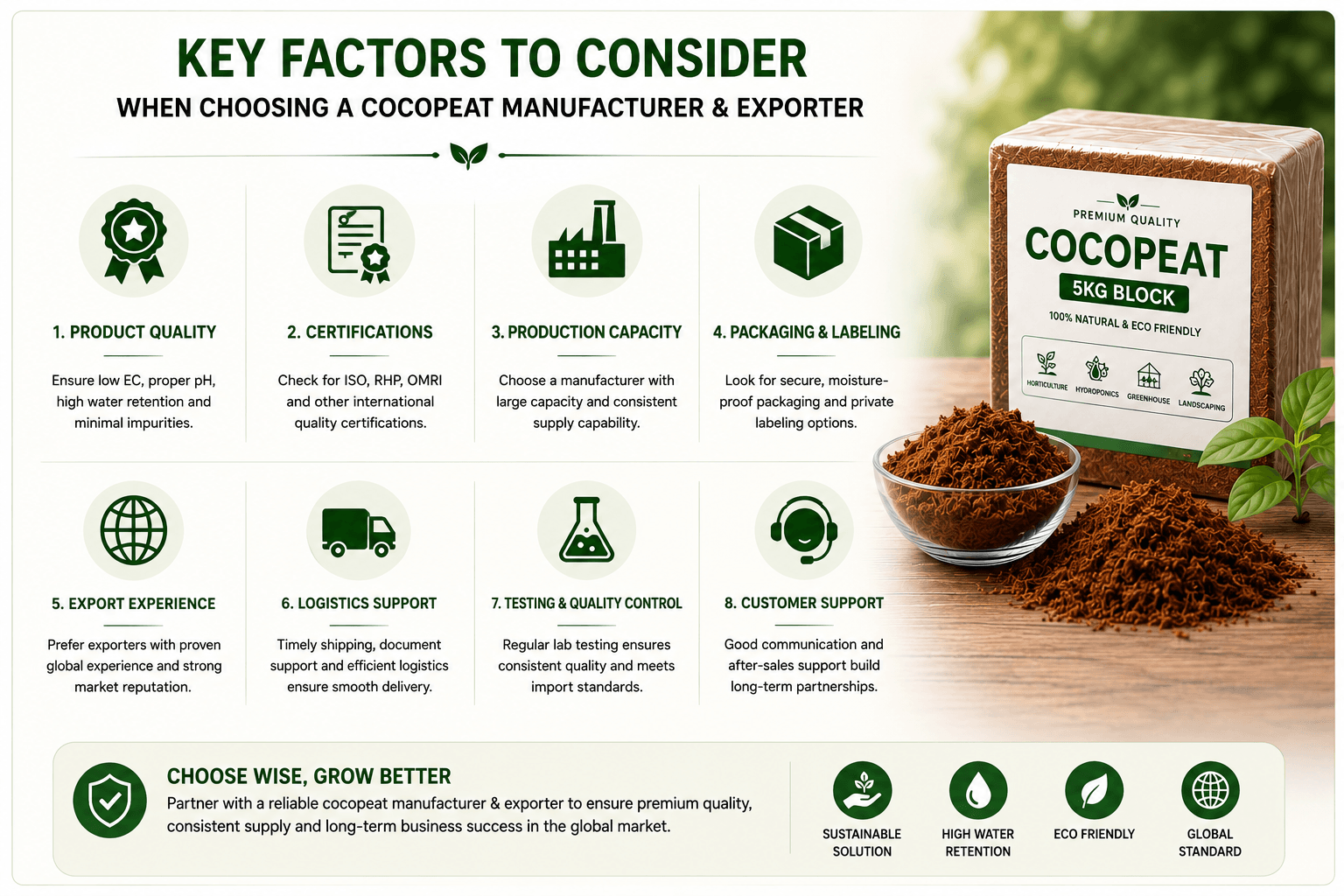
Key Factors to Consider When Choosing a Cocopeat Manufacturer
1. Product Quality Standards
Quality should always be the top priority when selecting a Cocopeat Manufacturer.
Check whether the manufacturer offers:
- Low EC Cocopeat
- Washed Cocopeat
- Buffered Cocopeat
- High Water Retention Capacity
- Proper pH Balance
- Low Fiber and Sand Content
Reliable manufacturers conduct laboratory testing to ensure uniformity and export-grade quality.
2. Export Experience and Certifications
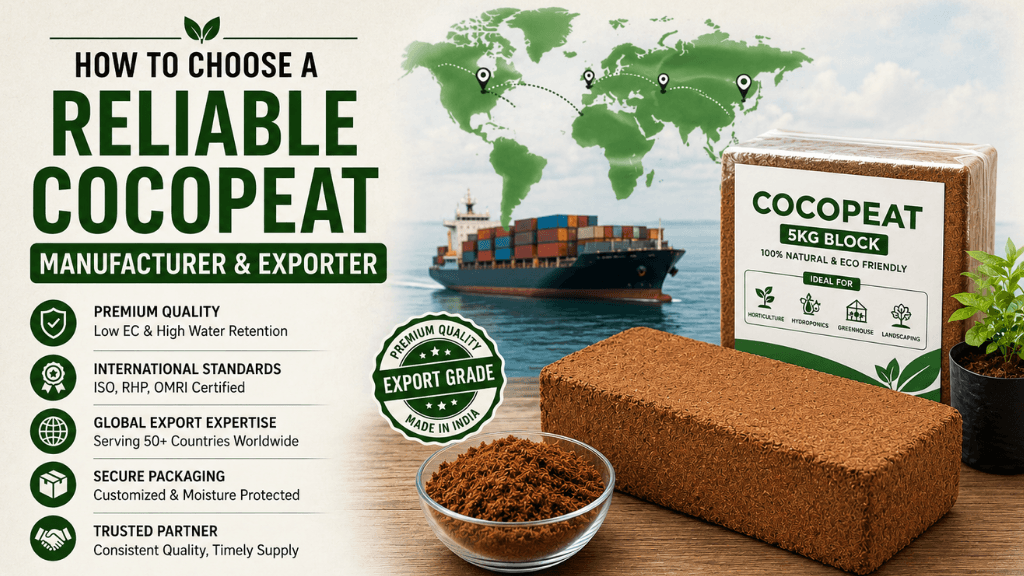
An experienced coco peat exporter understands international trade regulations, packaging standards, and shipping requirements.
Look for certifications such as:
- ISO Certification
- RHP Certification
- OMRI Certification
- Phytosanitary Compliance
- SGS Testing Reports
These certifications improve trust and ensure smooth import clearance in countries like the USA, Germany, Japan, and the UK.
3. Availability of Different Cocopeat Products
A professional cocopeat supplier should provide multiple product variants based on customer needs.
Popular products include:
5kg Cocopeat Block
The 5kg cocopeat block is one of the most demanded export products due to its high expansion ratio and easy transportation.
Cocopeat Grow Bags
Widely used in greenhouse cultivation and hydroponic farming.
Cocopeat Briquettes
Suitable for retail gardening and small-scale farming.
Coco Chips
Used for orchid cultivation and soil aeration.
Choosing a supplier with diverse product options helps buyers meet different agricultural applications efficiently.
4. Manufacturing Capacity and Supply Consistency
Global buyers often require large-volume shipments throughout the year. A trusted cocopeat exporter from India should have:
- Large Production Capacity
- Continuous Raw Material Availability
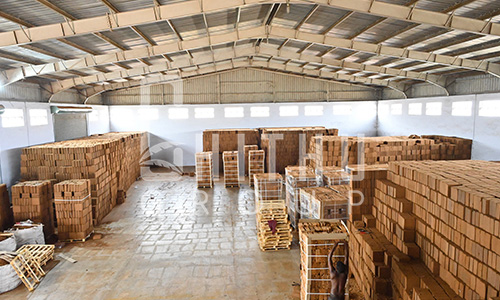
- Modern Storage Facilities
- Efficient Container Loading Systems
Consistent supply becomes especially important for importers in countries with large agricultural operations like China, the USA, and the UAE.
5. Packaging and Logistics Support
Export packaging plays a major role in protecting cocopeat during international transportation.
Reliable exporters provide:
- UV-Protected Packaging
- Palletized Container Loading
- Customized Branding
- Moisture-Resistant Wrapping
- Accurate Labeling
Strong logistics coordination ensures timely delivery and reduces the risk of shipment damage.
Global Market Trends Driving Cocopeat Exports
The international cocopeat market is witnessing strong growth due to sustainability trends and modern farming techniques.
Increasing Hydroponic Farming
Countries such as the UAE, Japan, and Singapore are adopting hydroponic cultivation due to limited agricultural land. Cocopeat offers excellent moisture retention and root aeration, making it ideal for hydroponics.
Shift Toward Organic Agriculture
European countries including Germany and the UK are encouraging organic farming practices. Cocopeat supports chemical-free cultivation and improves soil structure naturally.
Greenhouse Expansion in the USA
The USA continues to invest heavily in greenhouse farming and controlled-environment agriculture, increasing imports of premium cocopeat products.
Rising Demand in Southeast Asia
Southeast Asian countries are experiencing rapid growth in commercial horticulture, boosting demand for cocopeat grow bags and compressed blocks.
Questions to Ask Before Finalizing a Cocopeat Supplier
Before partnering with a Cocopeat Manufacturer, buyers should ask:
- What certifications do you hold?
- Can you provide product testing reports?
- What is your monthly export capacity?
- Do you offer customized packaging?
- Which countries do you currently export to?
- Can you provide sample products?
- What are your lead times for bulk orders?
These questions help evaluate the supplier’s reliability and export expertise.
Benefits of Working with a Reliable Cocopeat Exporter from India
Partnering with a professional cocopeat supplier from India offers several advantages:
- Competitive Global Pricing
- High-Quality Export-Grade Products
- Consistent Supply Chain Management
- Better Logistics Support
- Customized Private Labeling Options
- Strong Technical Assistance
These benefits help importers maintain stable business operations and improve customer satisfaction.
Conclusion
Selecting the right Cocopeat Manufacturer is essential for businesses involved in agriculture, horticulture, hydroponics, and international trade. With growing global demand across the USA, Germany, China, Japan, the UAE, the UK, and Southeast Asian countries, partnering with a reliable coco peat exporter can create long-term business opportunities.
India continues to lead the global cocopeat market with its advanced manufacturing capabilities, export infrastructure, and cost-effective solutions. By evaluating quality standards, certifications, production capacity, logistics support, and export experience, buyers can confidently choose the right cocopeat exporter from India for their business needs.
If you are looking for premium-quality 5kg cocopeat block solutions and dependable export support, partner with an experienced cocopeat supplier from India that understands international market requirements and delivers consistent quality worldwide.
FAQs
1. Why is India a major exporter of cocopeat?
India has abundant coconut production, advanced processing facilities, and strong export infrastructure, making it a leading cocopeat exporter globally.
2. What is a 5kg cocopeat block used for?
A 5kg cocopeat block is commonly used in hydroponics, greenhouse farming, nurseries, and soil conditioning due to its high expansion ratio and water retention properties.
3. Which countries import cocopeat the most?
Major importing countries include the USA, Germany, UK, UAE, Japan, China, and Southeast Asian countries.
4. What certifications should a cocopeat supplier have?
Reliable suppliers should have ISO, RHP, OMRI, SGS testing, and phytosanitary certifications.
5. How do I choose a reliable cocopeat exporter from India?
Check the supplier’s product quality, export experience, certifications, manufacturing capacity, logistics support, and customer reviews before finalizing.