Introduction
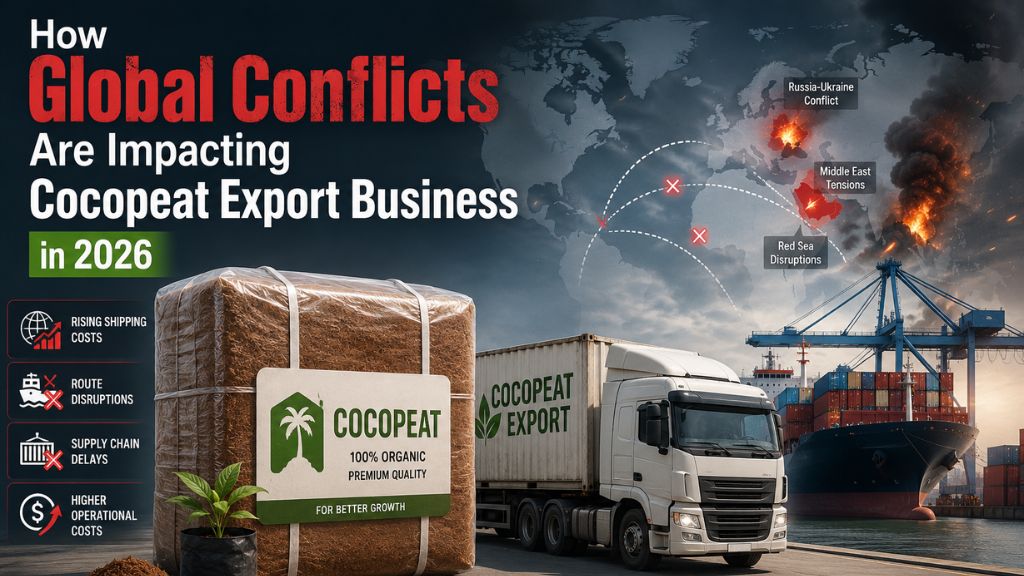
Global trade in 2026 is navigating a period of uncertainty shaped by geopolitical conflicts, rising oil prices, and persistent shipping disruptions. From war-driven instability to rerouted maritime routes, export-dependent industries are under pressure. The cocopeat industry, in particular, relies heavily on efficient global logistics, making it vulnerable to these shifts.
As a result, businesses are facing increasing cocopeat export challenges, from delayed shipments to rising costs. For importers and manufacturers, understanding these evolving risks is essential, not only to mitigate disruptions but also to partner with reliable exporters who can ensure consistency even in volatile conditions.
Why Global Conflicts Are Disrupting Cocopeat Exports
Geopolitical tensions across key regions have significantly impacted global trade flows. Conflicts and strained international relations have resulted in trade restrictions, sanctions, and increased scrutiny at ports.
Shipping routes that once enabled fast and cost-effective exports are now being diverted to avoid high-risk zones. This has led to longer transit times and operational inefficiencies. Additionally, ports in sensitive regions are experiencing congestion due to increased inspections and regulatory checks.
These developments have intensified cocopeat export issues 2026, directly affecting delivery commitments and increasing uncertainty for global buyers. The broader global trade impact on cocopeat is visible through fluctuating schedules, rising logistics costs, and reduced predictability in supply chains.
Impact of Rising Oil Prices on cocopeat export challenges
Rising oil prices remain one of the most critical factors affecting the export ecosystem. Since fuel costs form a major component of freight charges, any increase has a direct impact on shipping expenses.
Compared to pre-crisis levels, freight costs have surged by approximately 20–40%, depending on shipping routes and demand conditions. This sharp cocopeat freight cost increase is forcing exporters to reassess pricing strategies and operational planning.
In many cases, exporters pass a portion of these increased costs to buyers, resulting in higher landed costs. When combined with coco coir shipping delays, this creates both financial and planning challenges for importers trying to maintain stable supply chains.
Major Supply Chain Challenges in Coco Coir Industry
The ongoing global instability has exposed several vulnerabilities within the coco coir supply chain. Exporters are facing multiple logistical hurdles that affect both efficiency and reliability.
Container Shortages
The limited availability of shipping containers has significantly disrupted export operations, making it difficult for suppliers to secure timely bookings. This shortage slows shipment scheduling, increases waiting periods, and creates operational backlogs across the cocopeat export supply chain.
Port Congestion
High cargo volumes combined with stricter inspections and security protocols have led to severe congestion at major global ports. As a result, vessels face extended waiting times, causing delays in loading, unloading, and overall shipment processing.
Extended Delivery Cycles
Due to rerouted shipping routes, logistical inefficiencies, and ongoing global disruptions, delivery timelines have extended well beyond normal expectations. These prolonged cycles make it challenging for exporters and importers to plan inventory and meet demand consistently.
These factors contribute to persistent cocopeat logistics problems and broader cocopeat supply chain disruption, making it challenging for exporters to meet urgent or high-volume orders.
How It Affects International Buyers
US Buyers: Longer Lead Times
Buyers in the United States are experiencing extended delivery schedules due to rerouted shipments and port delays. This affects inventory planning and seasonal demand management.
European Buyers: Compliance and Cost Pressure
European importers face stricter environmental and quality regulations, along with increased import costs. Compliance requirements, combined with logistics challenges, add complexity to procurement.
Middle East Buyers: Price Volatility
For Middle Eastern buyers, fluctuating shipping costs and changing transit routes create price instability, making procurement planning more uncertain.
How Cocopeat Exporters Are Adapting to the Crisis
Despite ongoing disruptions, leading exporters are implementing strategic measures to ensure consistent supply.
- Adopting alternative shipping routes to bypass high-risk zones
- Planning bulk shipments to optimize freight efficiency
- Maintaining buffer inventory to manage sudden demand fluctuations
- Establishing local warehousing solutions in key global markets
Leading exporters in India are optimizing logistics and strengthening supply chain networks to overcome global challenges.
Chithu Group, as a trusted cocopeat manufacturer and exporter, aligns with this approach by focusing on quality consistency, reliable delivery commitments, and adaptive logistics strategies.
With a strong foundation in coir product manufacturing and global supply capabilities, the company is well-positioned to support international buyers even during uncertain market conditions.
| Key Factor | Impact on Cocopeat Exports |
|---|---|
| Global Conflicts | Disrupt trade routes and schedules |
| Rising Fuel Costs | Increase overall freight expenses |
| Container Shortage | Delay shipment planning and dispatch |
| Port Congestion | Extend loading and unloading timelines |
| Supply Chain Disruptions | Affect consistency and delivery cycles |
What Importers Should Do in 2026
To navigate current market volatility, importers must take proactive steps to reduce risks associated with sourcing cocopeat.
- Order Early: Plan procurement in advance to avoid delays caused by shipping disruptions
- Choose Reliable Exporters: Partner with experienced suppliers like Chithu Group who have strong logistics networks
- Check Certifications: Ensure compliance with international quality and sustainability standards
- Lock Pricing Contracts: Secure pricing agreements to manage cost fluctuations
Additionally, working with a trusted Cocopeat Manufacturer in India can significantly improve supply reliability and quality assurance.
Future Outlook of Cocopeat Export Market
While global conflicts are creating short-term challenges, the long-term outlook for the cocopeat industry remains positive. Demand continues to grow due to increased adoption of hydroponics, organic farming, and sustainable agriculture practices worldwide.
Although the current environment presents ongoing cocopeat export challenges, it also encourages innovation and resilience within the industry. Exporters are becoming more agile, and supply chains are evolving to adapt to global uncertainties.
In the coming years, as global trade routes stabilize and logistics systems become more efficient, the cocopeat export market is set to regain momentum. Chithu Group, with its strong infrastructure, strategic planning, and commitment to customer trust, is well-positioned to play a key role in shaping the future of global cocopeat supply.
Final Words
Global conflicts have reshaped the cocopeat trade landscape, creating cost pressures and logistical uncertainties for exporters and importers alike. However, with the right strategies and reliable partners like Chithu Group, businesses can navigate these challenges effectively. As the market evolves, adaptability and strong supply chain management will be key to ensuring consistent growth and long-term success.
Partner with Chithu Group for reliable cocopeat supply amid global challenges.
FAQs
Q1: Why are cocopeat shipping costs increasing?
Shipping costs are increasing due to rising fuel prices, longer shipping routes, and higher freight demand caused by global conflicts.
Q2: Is cocopeat export affected by global conflicts?
Yes, global conflicts disrupt trade routes, create port delays, and increase costs, significantly impacting cocopeat exports.
Q3: Which countries are best for cocopeat import now?
Countries with stable logistics infrastructure, such as the US, parts of Europe, and the Middle East, remain strong import markets.
Q4: How to reduce cocopeat import risk?
Importers can reduce risk by ordering early, choosing reliable exporters, verifying certifications, and securing fixed pricing agreements.
Q5: What is the future of cocopeat exports in 2026?
Despite short-term disruptions, demand for cocopeat is expected to grow due to its eco-friendly and sustainable applications in agriculture.